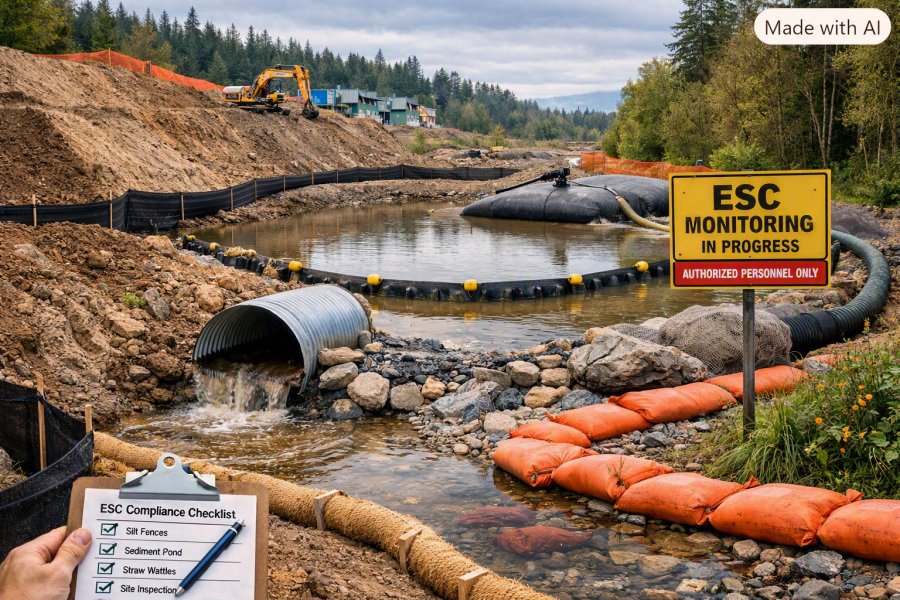
If you’ve ever managed a construction site or development project in British Columbia, you’ve probably felt the sting of erosion and sediment control (ESC) costs. Silt fences, sediment ponds, straw wattles, inspections, and paperwork—it all adds up fast. It’s easy to wonder: Is all this really necessary?
As an ESC Professional, I can tell you—yes, it is. Painful as the invoices may be, ESC is one of those investments that pays off quietly, protecting both your project and the environment long after the work is done.
Erosion and sediment control costs stem from several realities:
Materials and installation: Proper ESC measures require durable materials and skilled labour. A poorly installed silt fence is worse than none at all.
Monitoring and maintenance: ESC isn’t “set and forget.” It needs regular inspection, especially after heavy rain.
Regulatory compliance: Municipalities and provincial agencies enforce strict standards to protect waterways, fish habitat, and downstream properties. Meeting those standards takes time and expertise.
It’s true—these costs can feel disproportionate, especially on small projects. But the alternative is far more expensive.
Without ESC, soil and sediment wash off exposed ground into creeks, storm drains, and wetlands. That sediment clogs culverts, smothers fish eggs, and degrades water quality. Cleanup costs can be enormous, and fines for non‑compliance can easily exceed the cost of prevention.
Beyond the dollars, there’s reputational damage. In BC’s environmentally conscious communities, a muddy runoff photo on social media can do real harm to a company’s image.
Erosion and sediment control isn’t just about compliance—it’s about stewardship. Every site connects to a watershed, and every watershed supports life. ESC measures protect salmon habitat, prevent flooding, and keep our creeks and rivers healthy.
In a province defined by its water—mountain streams, coastal estuaries, and fertile valleys—these protections aren’t optional. They’re part of building responsibly in British Columbia.
The best approach is proactive planning:
Integrate ESC early in design, not as an afterthought.
Use native vegetation and natural stabilization where possible.
Train crews to maintain controls effectively.
Document everything—good records save headaches during inspections.
When done right, ESC becomes a mark of professionalism, not a burden. It shows clients, regulators, and the public that you care about doing things properly.
All-Terrain Consulting Ltd. serving Vancouver, Burnaby, West Vancouver, North Vancouver, Belcarra, Cariboo Regional District, Surrey, Langley, Abbotsford, New Westminster, Mission, FVRD, Harrison Hot Springs, Hemlock Valley Ski Resort, Squamish-Lillooet Regional District (SLRD), Squamish, Whistler, Pitt Meadows, Galiano Island, Victoria, Saanich, Gulf Islands, Sechelt, Gibsons, Chilliwack, Agassiz, West Kelowna, Campbell River, Vancouver Island, Okanagan, White Rock, Pitt Meadows, Maple Ridge, Port Coquitlam, and Coquitlam.
Copyright 2026, All-Terrain Consulting Ltd. • Website by Atef Design
