Construction in British Columbia means working in a climate where heavy rainfall isn’t an exception—it’s an expectation. During the construction phase, large volumes of stormwater can overwhelm a site quickly, increasing risks to worker safety, infrastructure, and the surrounding environment. At All‑Terrain Consulting, we help developers and contractors implement practical, cost‑effective methodologies to manage water on site while maintaining compliance with municipal ESC bylaws.
Below are the core strategies we rely on to keep sites safe, functional, and environmentally responsible during major rain events.
Before the first excavator bucket hits the ground, a site should be shaped to move water away from work zones and sensitive areas. Temporary grading, berms, and diversion channels help direct stormwater toward designated containment or treatment areas. This early planning step is one of the most effective ways to prevent flooding and erosion during peak rainfall.
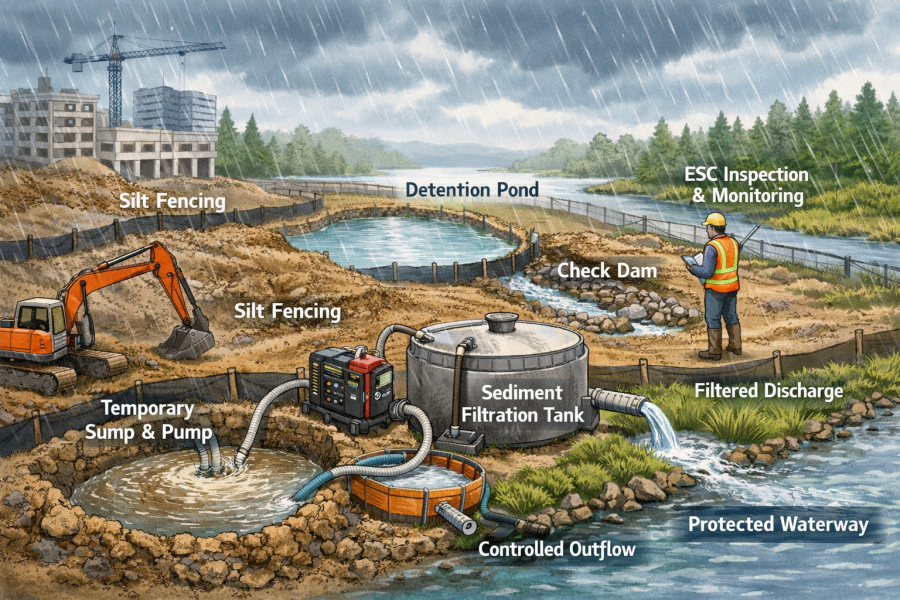
When rainfall exceeds infiltration capacity, temporary sumps become essential. These low‑point collection areas allow water to pool in a controlled location where it can be pumped to a stable discharge point. Pumps should be sized for worst‑case storm events and equipped with backup power or redundancy to avoid failure during critical periods.
To protect downstream watercourses, pumped water must pass through appropriate filtration—such as sediment bags, weir tanks, or vegetated discharge zones—before leaving the site.
For large or complex projects, temporary detention ponds or modular storage tanks provide additional buffering during intense storms. These systems slow down peak flows, reduce erosion potential, and give crews time to treat water before release. In urban areas with limited space, above‑ground tanks or portable bladder systems can be deployed quickly and removed once construction is complete.
Heavy rain mobilizes fine sediments rapidly. To prevent turbid water from leaving the site, we use a combination of:
Reinforced silt fencing
Check dams in ditches and swales
Coir logs and wattles
Gravel berms
Sediment traps and settling tanks
When rainfall is extreme, flocculants may be required to meet municipal turbidity standards.
Even the best ESC plan needs active monitoring during a storm. Our team conducts real‑time inspections to identify overtopping, erosion, or equipment failure. Adjustments—such as adding pumps, reinforcing berms, or clearing debris—are often needed to keep systems functioning under high flow conditions.
After the rain stops, we evaluate site conditions, repair any damaged controls, and update the ESC plan as needed. This adaptive approach ensures the site remains resilient throughout the construction period, especially during BC’s long wet seasons.
Managing large volumes of water during construction isn’t just about compliance—it’s about protecting infrastructure, reducing delays, and safeguarding the natural systems surrounding your project. With over 20 years of experience in erosion and sediment control across Metro Vancouver, All‑Terrain Consulting provides practical, field‑tested solutions tailored to each site’s unique challenges.
If you need support preparing or implementing a water management strategy for your construction project, we’re here to help.
Contact All‑Terrain Consulting at (778) 230‑4174 to discuss your ESC needs.
